
Designing a bookmark system to improve navigation
This project focused on creating a simple, personalized navigation system that reduced friction, improved efficiency, and helped players spend less time navigating and more time engaging with gameplay.

My role
My Team
Platform

Context
CONTEXT
Business Objectives
Reduce navigation friction by giving players faster access to frequently visited locations.
Increase engagement with core gameplay loops by minimizing time spent searching the map.
Improve player retention through a more convenient and personalized user experience.
Enhance usability of the world map as the game continues to grow in complexity.
Support player efficiency by reducing repetitive actions and streamlining daily activities.
CONTEXT
Constraints and Limitations
The solution needed to fit within an already complex map interface, align with existing navigation patterns, support scalable bookmark management, and remain achievable within live-service development timelines and technical limitations.
Design Process
🔍 Research
To better understand the problem, I reviewed existing map navigation flows and documented common player behaviors.
Several recurring patterns emerged:
Frequent Site Revisitations
Players often returned to the same locations multiple times per session, including:
Alliance members
Resource farms
Strategic targets
Event-related locations
Personal objectives
Existing Navigation Was Repetitive
Navigating to these locations frequently required:
Opening the world map
Searching or manually locating coordinates
Traveling to the destination
These repetitive steps created friction in a system players used daily.
DESIGN
Competitor Analysis
To inform the design of the Bookmarks feature, I evaluated how other products and games help users save, organize, and revisit important destinations. I looked beyond direct competitors to understand bookmarking patterns across both productivity and gaming experiences.
Google Chrome Tabs & Bookmarks provided insight into how users organize frequently accessed content and return to it with minimal effort. The simplicity of saving, naming, and quickly accessing bookmarked pages reinforced the importance of reducing friction and supporting personalized organization.
Clash of Clans demonstrated how strategy game players navigate between frequently visited locations and manage large amounts of information within a limited mobile interface. Its emphasis on quick access and streamlined interactions highlighted the need for efficient navigation patterns that do not interrupt gameplay.
Elden Ring offered valuable examples of map markers and player-driven wayfinding. By allowing players to place custom markers and create their own points of interest, the game empowers exploration while reducing the cognitive burden of remembering important locations. This reinforced the value of giving players ownership over how they navigate the world.
Key Takeaways
Enable fast access to frequently visited destinations.
Give users control over their own organizational system.
Reduce the cognitive load of remembering important locations.
Keep interactions lightweight and accessible within existing navigation flows.
Balance flexibility with simplicity to avoid overwhelming users.
These findings shaped a bookmarking experience that allowed players to save, organize, and quickly revisit important locations while maintaining a clean, intuitive navigation experience.


DESIGN
Original Flow

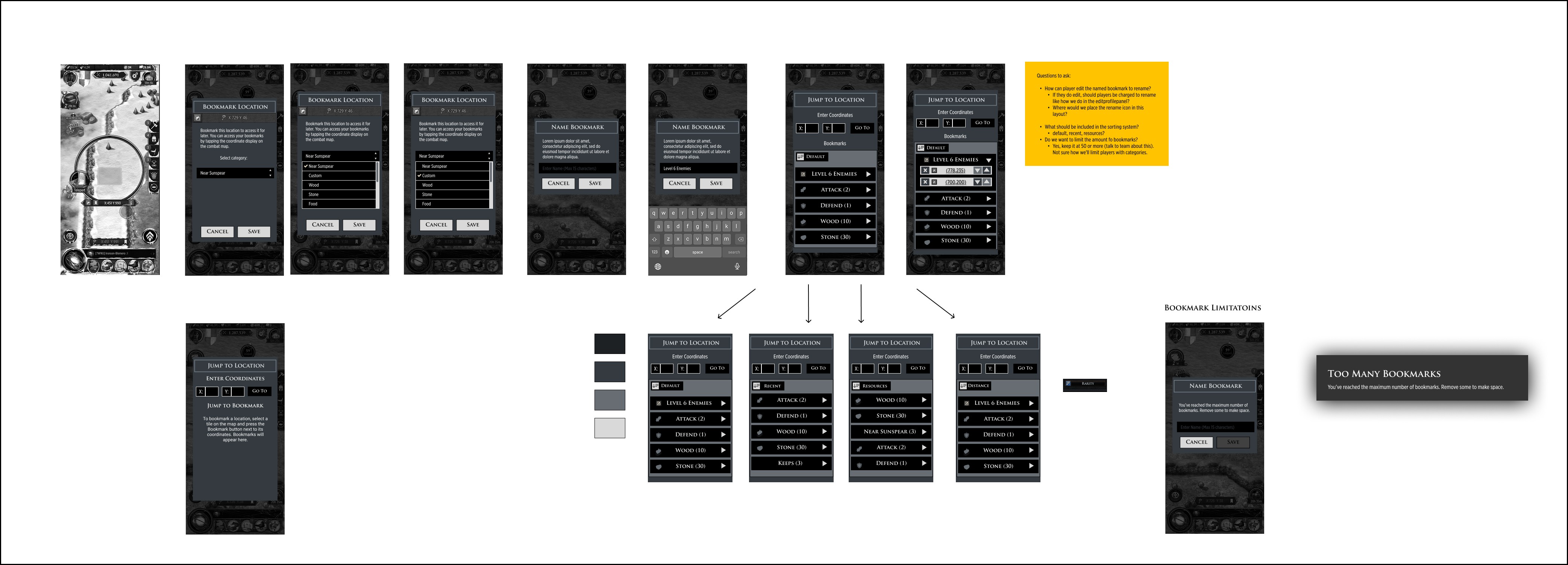
I took the original bookmark flow and expanded upon it because we were on a tight deadline and the engineer team didn’t want to reinvent the wheel when we already had the tech. I still wanted to provide a customized option even though it was out of spec. It’s important to provide options especially if it’s something we could deem as a V2. For option A, I kept the first three panels of the original flow and added a modal that asks the player to name their bookmark. I grabbed inspiration from Google tabs. I’ve always loved how Google gave users the control to customize their own bookmarks. The only problem I foresaw was players potentially using profanity as names, but we had Sift ( a community moderation platform) that wouldn’t allow that.
Naming and saving the bookmark will name the categories, but not the coordinates. The coordinates will be contained within the category. The coordinates can be moved either above or below each other. I thought of another potential use case where the list of the categories could get long. We needed a way to let players know they have too many bookmarks and not allow that. I wasn’t sure if we needed to limit them as it wasn’t in the spec, so I made a list of questions to ask game designers and/or product.
Option A |
|---|
 |
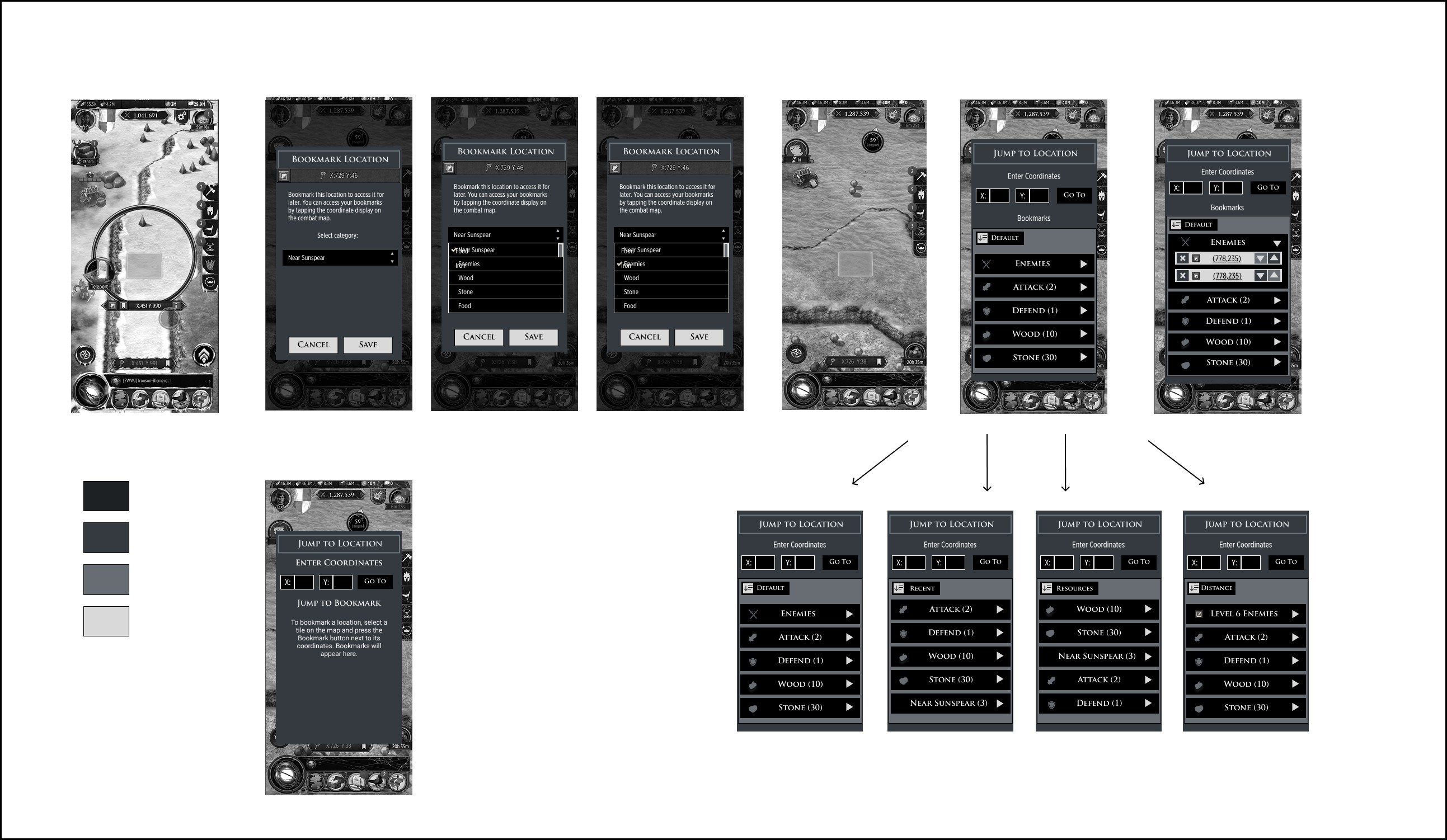
For option B, I stayed true to the original flow. The only difference is the bookmark locations wil be the name of the categories. There will be no customization involved. I thought this was a solid option because it satisfied all of the requirements. The engineer team has the tech, it would involve some amount of code to categorize the bookmarks.
Option B |
|---|
 |
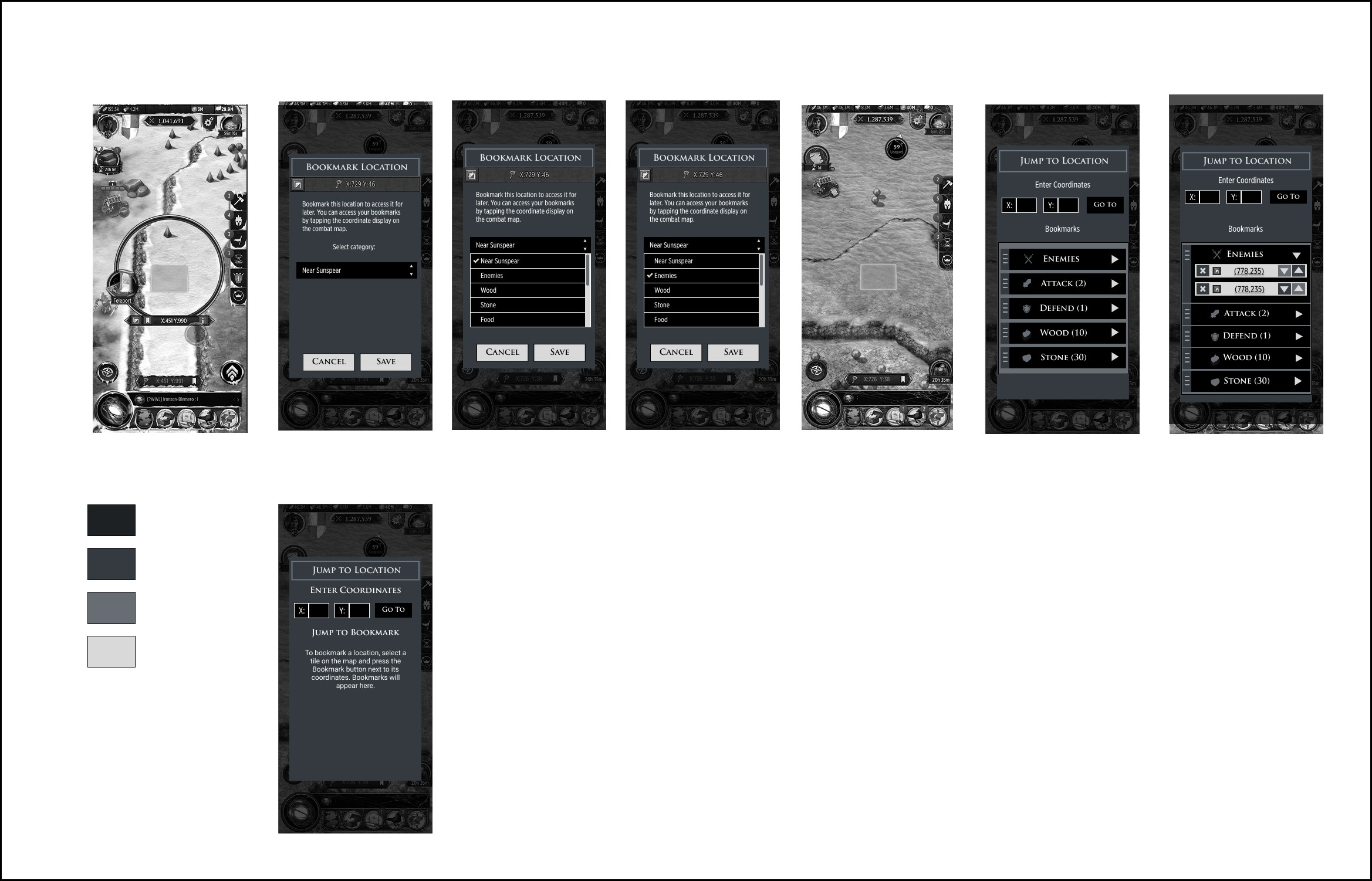
Lastly, for option C I wanted to explore a drag-and-drop method. Once again, we did not have the tech for this, but I wanted to explore it anyway for a V2 version. The drag-and-drop option was interesting because it lets the player organize the categories even further, which allows more customization.
Option C |
|---|
 |
DESIGN
Feedback
The stakeholders were engineers, a community manager, a producer, and game designer. The few tweaks were to display the hero rarity in a different way, add a favorite button, and a details button.

DESIGN
Best of Both Worlds
Option B
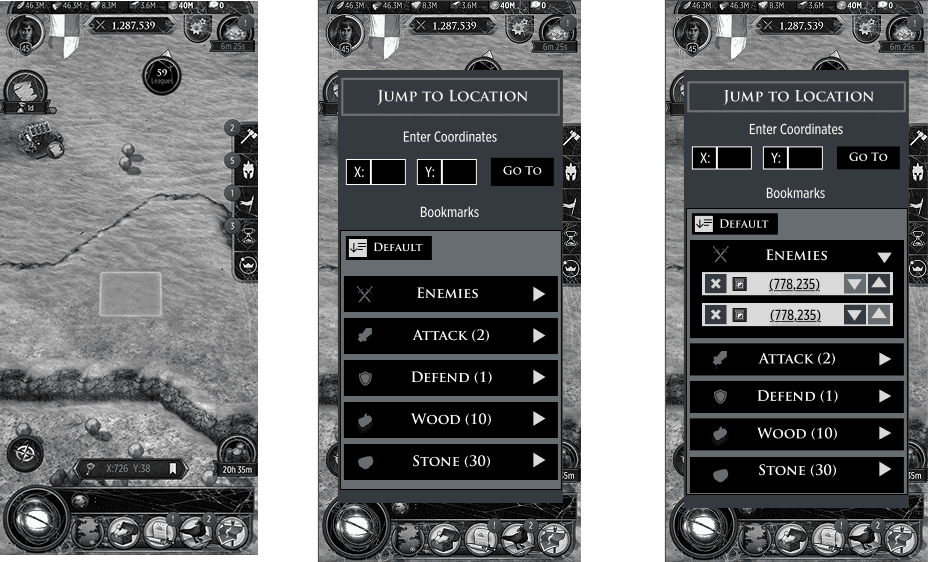
THE FINAL OPTION.
Outcome
✨ Learnings & Future Thinking
It's important to still explore ideas even if they're outside of the spec. I believe it's important to not limit yourself and try presenting ideas no one has ever thought of. Although as a team we didn't go with the other options, we now have something to build in the future when customization is more of a priority.
BEFORE · WIREFRAME

AFTER · SHIPPED EXPERIENCE

BEFORE AND AFTER.